Articles

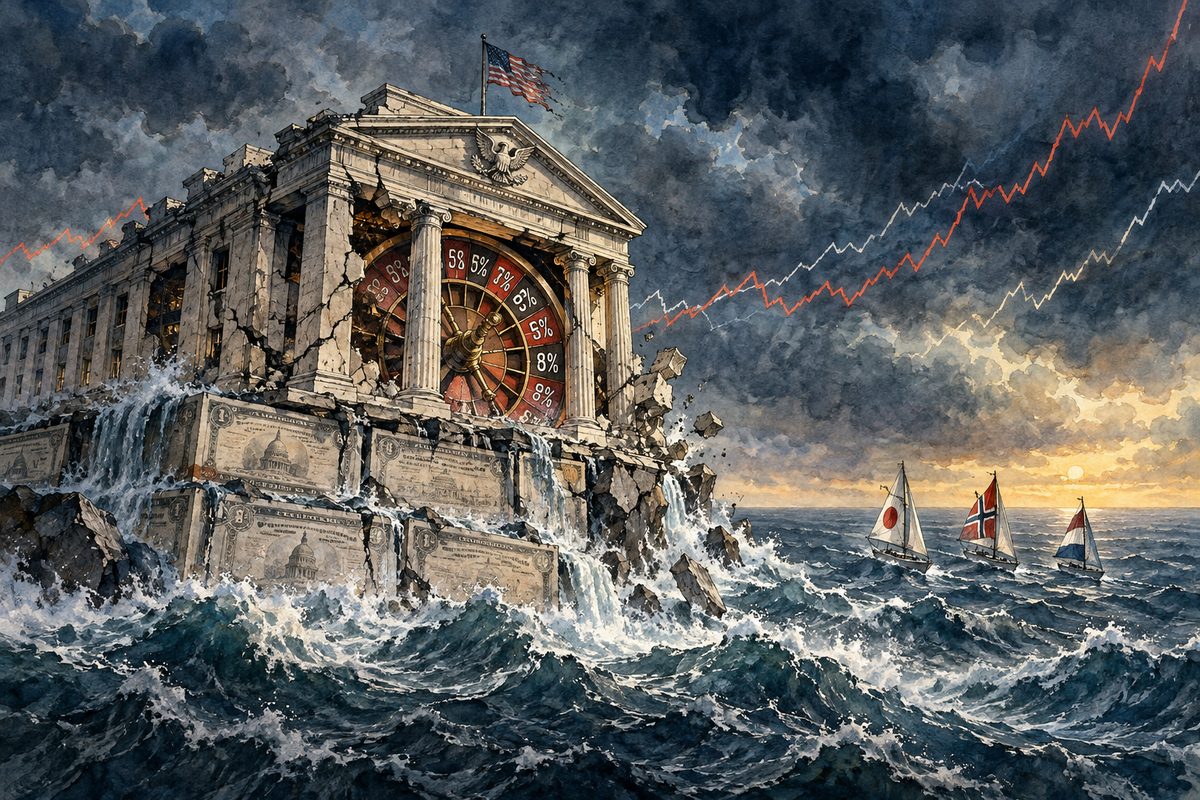
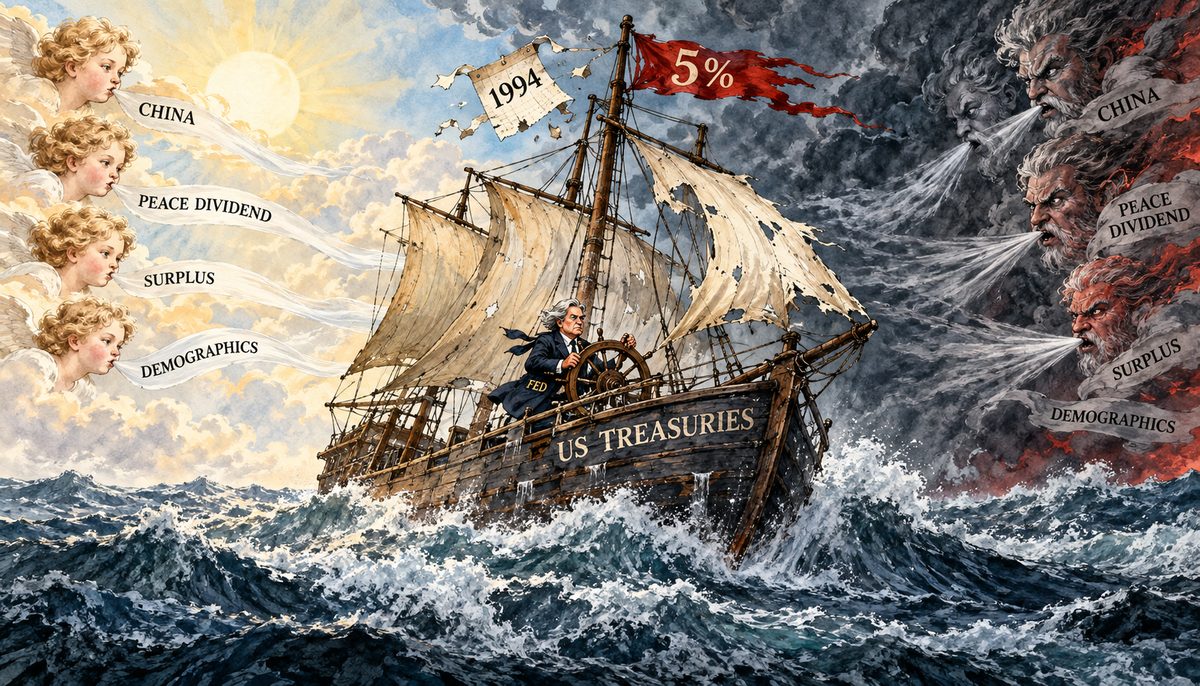
1994 is the right comparison for the wrong reasons: The bond sell-off then had history's tailwinds. Currency markets.

Bond markets love the 1994 precedent. But back then, the Berlin Wall, a China nobody feared and a shrinking Pentagon did much of the Fed's work. Who does it in 2026?

US Treasuries look cheap, but they are not yet a buy: America's AI bet still needs a higher price of capital

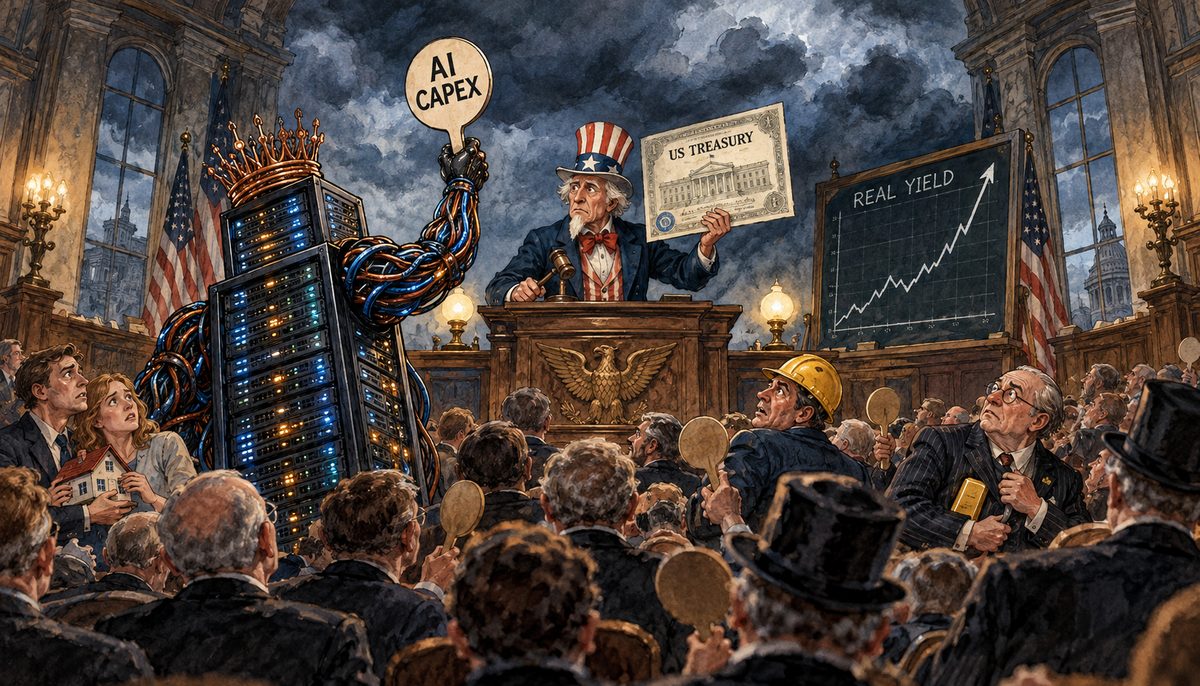
A 19-year high in the US ten-year yield looks like the entry point bond investors have waited for since 2008. History agrees. The inflation-linked market does not. Someone in the US economy is now willing to pay more for capital than almost anyone else.

The IFO beat: Germany can pay but cannot reform. France can do neither

Germany's ifo index beat every forecast in September. Look inside the order book, however, and a different question emerges: is Germany recovering, or is the state simply placing the orders? Across the Rhine, France is testing how long bond markets will wait for a budget a divided parliament may never pass.

Britain's fiscal arithmetic leaves no room to hide:Β When the state needs capital, and none is left to give

Britain just borrowed more than forecast, five weeks before a Budget its Chancellor can barely afford to deliver. Gilt yields haven't been this high since 1998, AI capex is still mostly promises, and Reform's war chest just tripled. Something has to give β€” the question is what, and who pays for finding out.

Germany is in a lose-lose situation because voters are unprepared: Germany pays for the boom before it has one

Germany's chancellor has lost the argument in public twice in a fortnight. But the harder question is not who takes his job. It is who can take it, keep a majority and still do what the economy needs. And why is the market that just pushed US yields past 5% already looking at Frankfurt?

America's capital scarcity problem is bigger than Scott Bessent: Why Bessent can't out-trade the bond market

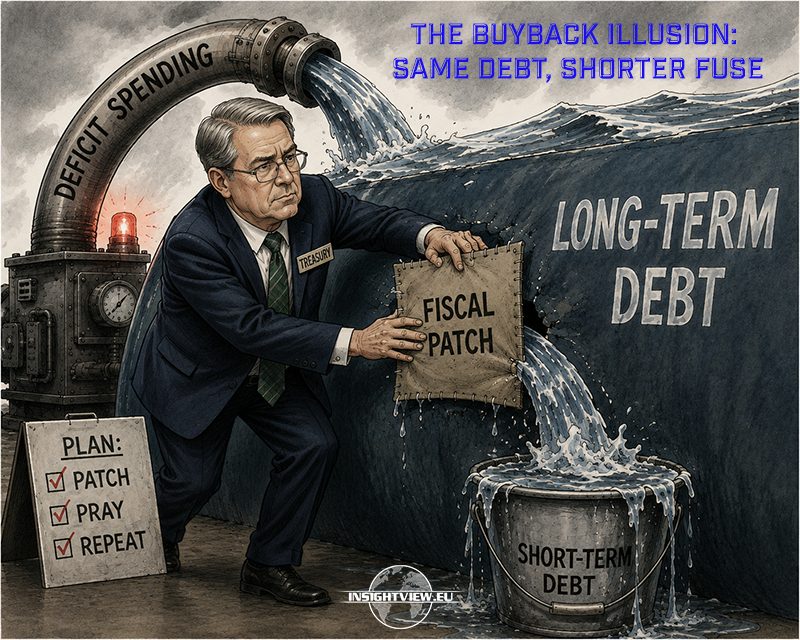
Scott Bessent says he's 'the house' in the yen market and tripled the Treasury's bond buyback to calm yields. The market didn't blink β€” yields hit a three-year high anyway. Is this just noise, or is something structural quietly repricing who wants to hold US debt at all?

The yen carry trade is dying because Japan needs its own money: Japan's savings are going home, and America is the marginal loser

The yen just jumped to a six-month high, and it is barely about the yen at all. Something in Japan's bond-market plumbing has quietly changed β€” and it may explain why Japanese money is about to stop funding everyone else's deficits, starting with America's

China's AI export boom should worry the Fed and ECB. Why Beijing is quietly recapitalising banks

China's trade numbers look like a triumph β€” exports up 25%, a record surplus. So why did Beijing rush a $54bn rescue into its banks and insurers the very same week, and why did their shares fall anyway? The answer says less about China than about what comes next for Western interest rates.

Saxony-Anhalt's AfD Earthquake Is a Fault Line Under Merz, and Under Europe: The East Didn't Come Off the Sofa to Stop the AfD - It Came Off the Sofa for It

Saxony-Anhalt turned out in record numbers β€” but not to stop the AfD. What does an earthquake result in one German state mean for Merz, for the firewall, and for how Europe chooses to defend, supply and finance itself?

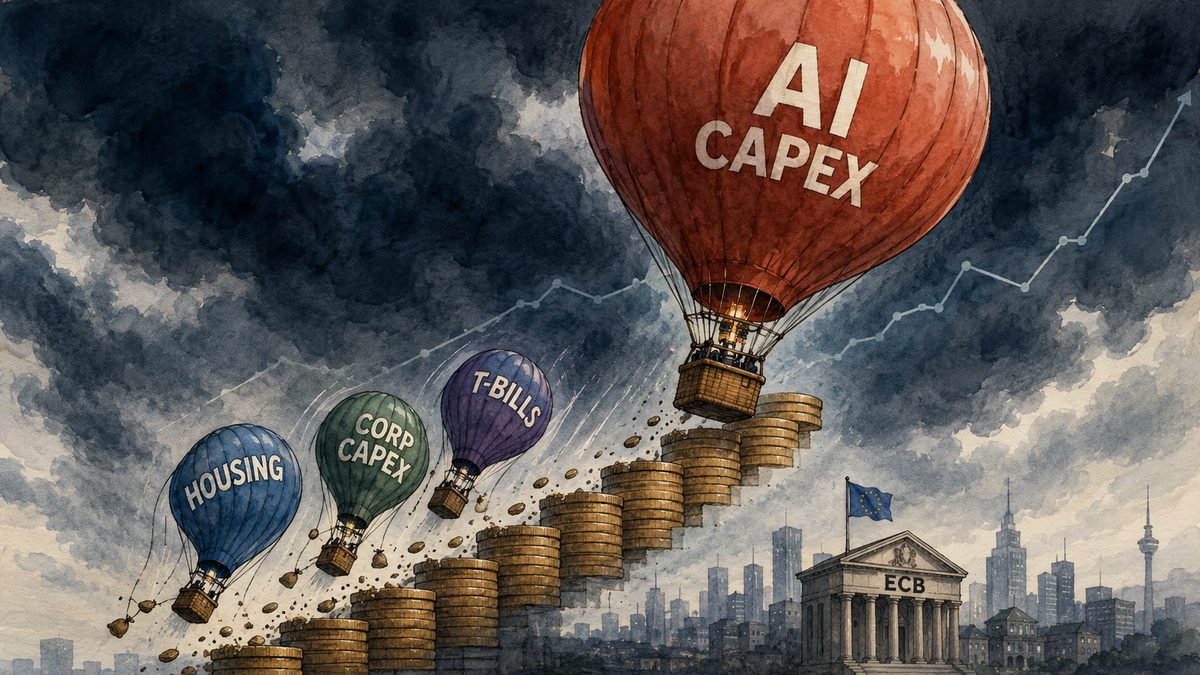
AI capex is, to no small extent, resetting the price of capital for everyone else

AI capex now commands the biggest slice of available capital and the highest perceived return β€” a combination that doesn't just win financing, it resets the price of it for everyone else. The US has already felt the squeeze. Is Europe about to find out what that really costs?

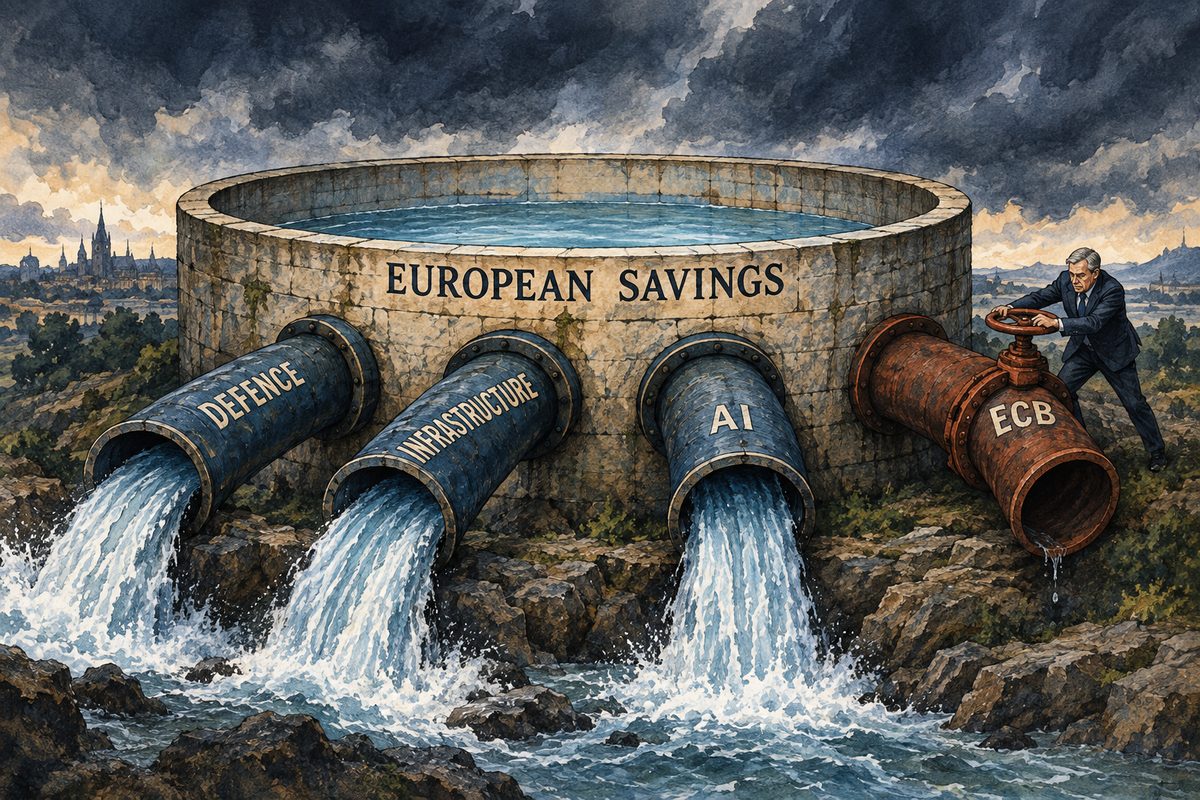
Eurozone inflation: Whether AI brings disinflation or deflation is still an open question. The cost of capital isn't

Eurozone inflation just hit 3.3%, its fastest pace since 2023. But the scatter plots don't show a wage-price spiral β€” they show something else entirely. While markets fixate on this month's HICP print, a much bigger fight over Europe's savings is already reshaping bond yields. Here's what the headline number is actually hiding.

The Retreat from Hard Choices - Why Bond Investors Will Continue Heading for the Exit

The Big Read: What Germany's Voters Are Actually Saying - and What Are AfD's Plans?

Three German state elections in a fortnight. An AfD polling at 40% whose own supporters trust it less than they trust Merz. A CDU firewall that holds against the AfD but is cracking against Die Linke. And a French hard-left proposal about to make Berlin's fiscal argument look almost reasonable by comparison.

There will be no updates on 14-18 September (vacation)

The audio speaker version of the Mid-Year Presentation is now available

Why the Philadelphia Fed survey should worry Bessent: Capex expectations hit a 53-year high - and the Fed can't ignore it

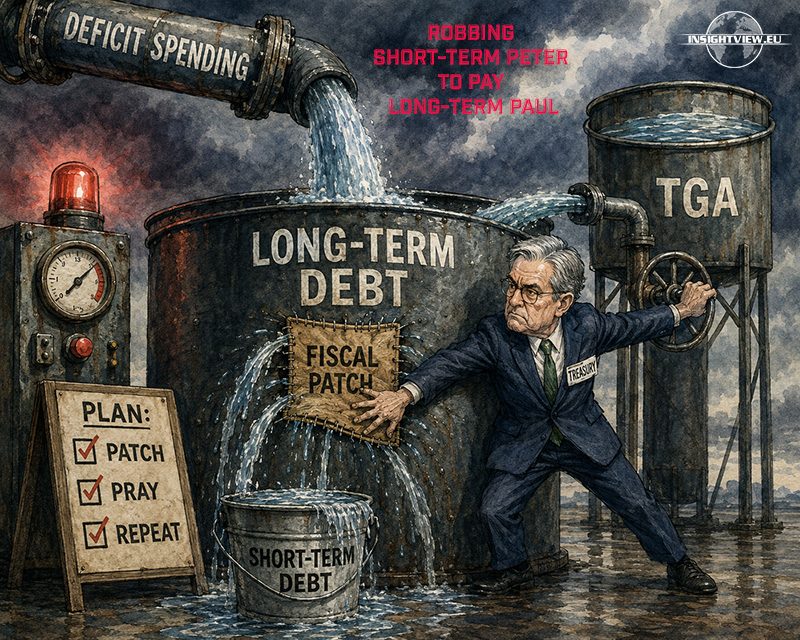
Bessent's Band-Aid: A Duration Problem Becomes a Rollover Problem. The Debt Crisis Has Started

Real yields, not inflation, to no small extent, are repricing the West. Why QE cannot rescue Washington, Brussels or Berlin this time

Beijing isn't coming to the rescue, and that may be the point. China's credit turns negative

The Perfect Storm? AI, Chinese Overcapacity, and the Demographic Dividend That May Never Arrive. Debt Crisis

NFIB's optimism recovery is a capital story, not necessarily a labour story

Not AI yet: America's labour market muddle is about bonds, Iran and a nervous Treasury

China's July trade data show a country winning the world by exporting domestic excess capacity, but unable to fix its own living room

Behind Germany's headline order jump sits a capital-hungry AI and defence buildout

America's factories are booming, but only where AI touches them: The Fed's excuse not to raise rates in September is running out

The price of the rescue: Why the yen intervention was never a favour: The bill lands in the US and European bond markets

Why 1.5% growth masks a hotter, stickier US economy: Phase One and Two still prevail

Two Speeds Eurozone: Spain's Bet, Germany's Bill. Europe's Demographic Cushion Is Borrowed Time

Japan has every reason to hike. Takaichi's fiscal ambitions are colliding with the BoJ's credibility

Ambiguous German IFO Survey Reflects Secular Headwinds and Difficulties in Harnessing Tailwinds

The AI tax windfall Washington shouldn't bank on: What Yale's AI tax model leaves out

Andy Burnham inherits two straitjackets and a plan for only one. Who is next in line to become Prime Minister?

Strong data, weak strategy: Is the US sleepwalking into China's commoditisation playbook?

What China's Trade Data Really Signals. Chinese 'AI commodisation' gains momentum

France's far-right moment meets its fiscal ceiling: Marine Le Pen's options are limited without 'EU protection'

Why AI's second phase won't be gentle. Inside AI's messy second phase [updated]

US growth is still AI-fuelled. The three-phase AI economy, and why markets only want to focus on one of them

Reform, without a face to sell it. Germany moves at coalition speed. AfD moves at Erfurt speed

Is Artificial Intelligence Walking Into the Swamp? The Midterm Wildcard Nobody Is Pricing In

Germany's slow-motion crisis continues: Berlin's paralysis is AfD's opportunity

EU Survey: Easing inflation expectations conceal a structural surge in capital demand that a Ukraine-Russia peace would only amplify

The Reform Dividend continues: Sweden's Structural Edge in a Turbulent World

The Price of Intelligence: AI's Inflationary Consequences Are No Longer Theoretical

The AI Economy's Reckoning: Costs, China and the Ballot Box. Too Much Capital, Too Little Runway

German Reforms, British Succession: Why Europe's Bond Market Must Now Watch Both Flanks

The Strong Man Without a Moustache - and the One With. Trust Has Left the Building - Only the Untested Remain Popular

Video: From Investment Boom to Deflation Risk. The Three Stages of the AI Economy

No Exit: The Federal Reserve in the Age of AI Inflation

'Good Enough'. How China's AI Strategy Could Rewrite the Global Price Story - in the Short and Long Run

The Art of the Deal, Or the Price of Peace? The Hidden Arithmetic Behind the Iran Deal

Page 1 of 17 (836) Next β†’