 AI-generated
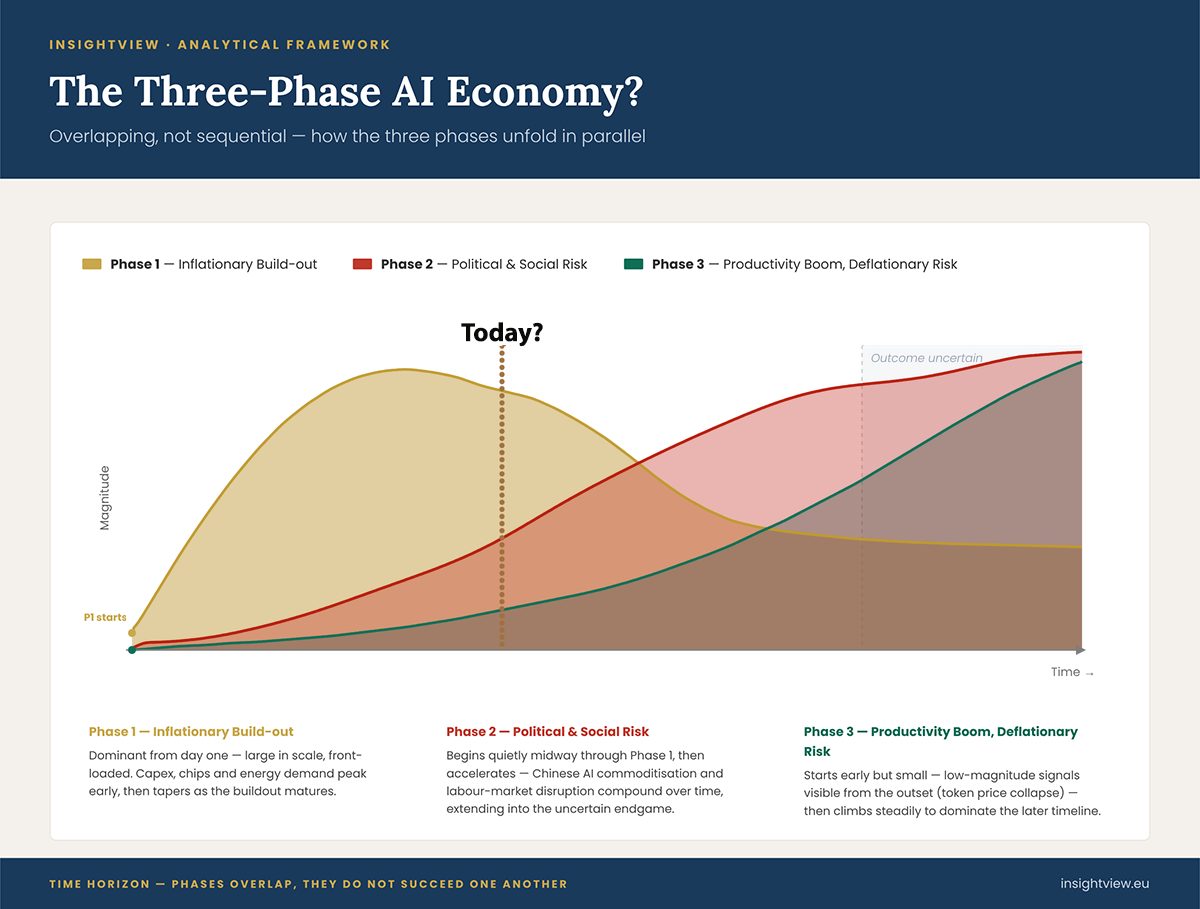
Wall Street reads the tech sell-off as a valuation story. Insightview sees Phase 2 of the AI economy – political and social risk – arriving early. There are jobs, but wages are losing share to profits, and the young carry pensions, prices and AI disruption. Protests are spreading across Europe, and young Americans lean heavily Democratic. A midterm rebuke adds friction to the AI boom; long US yields stay high.
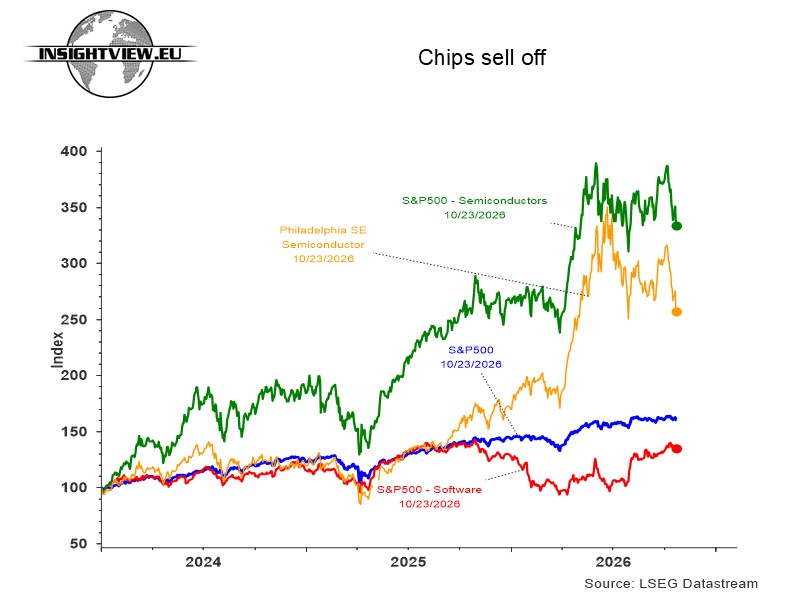
Wall Street sees a valuation story. Meta's shares sank 6% as AI spending pushed its free cash flow negative, Chinese equities slid into a bear market as $2.4tn vanished, and the Philadelphia semiconductor index has lost almost a fifth since its recent high.
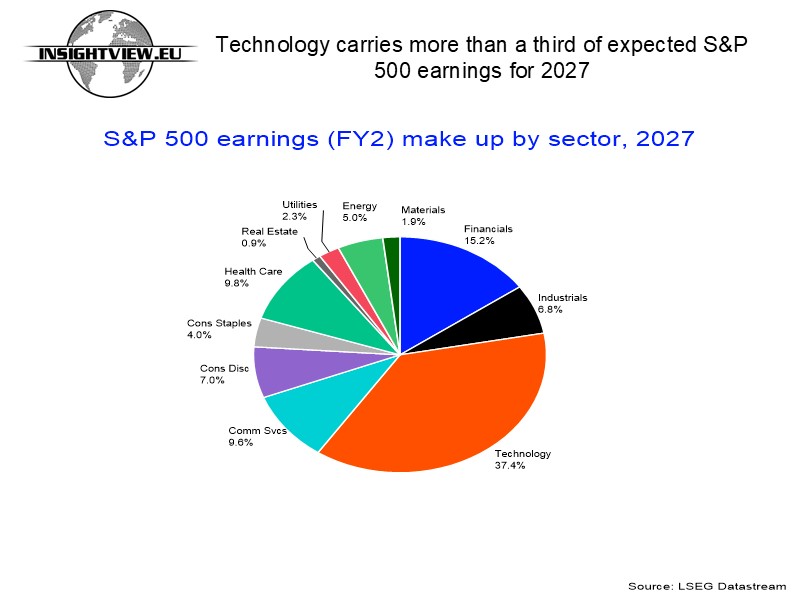
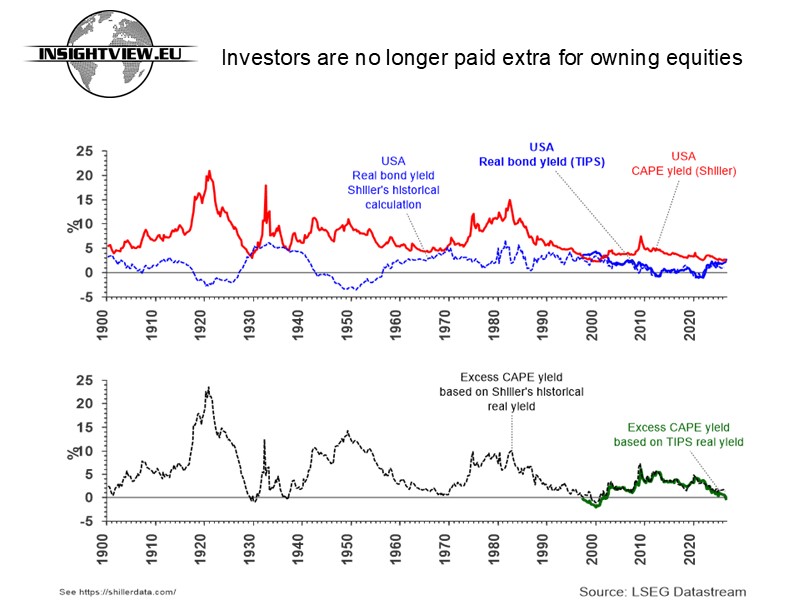
The market has little room for error. Technology accounts for 37.4% of expected S&P 500 earnings for 2027, and the gap between the cyclically adjusted earnings yield and the real yield on inflation-linked Treasuries is close to zero. Investors are no longer paid extra for owning equities rather than bonds.
Insightview reads the sell-off differently. The question is not only whether AI is overvalued, but who pays for it – and who is starting to protest.
Phase 2 arrives early.
Insightview's Three-Phase AI framework assumed that Phase 2 – political and social risk – would begin quietly midway through Phase 1, the inflationary build-out. It is arriving while Phase 1 is still close to its peak.
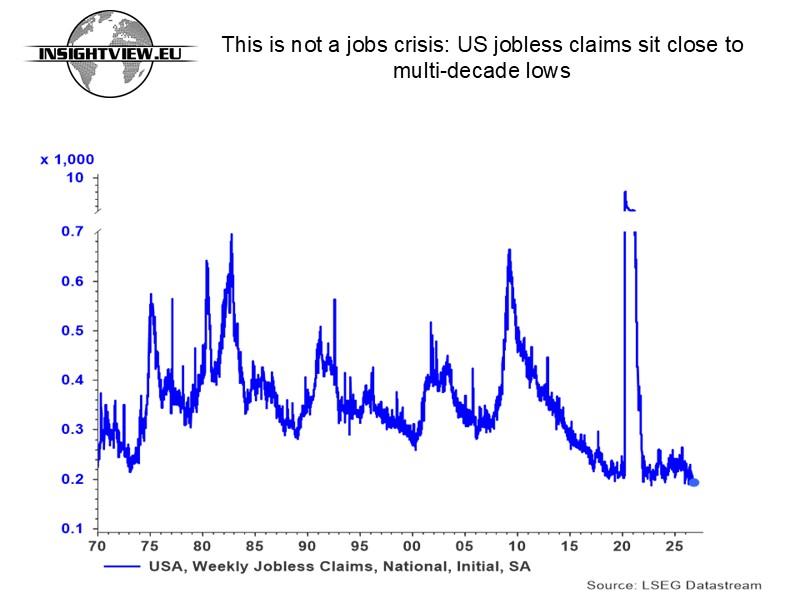
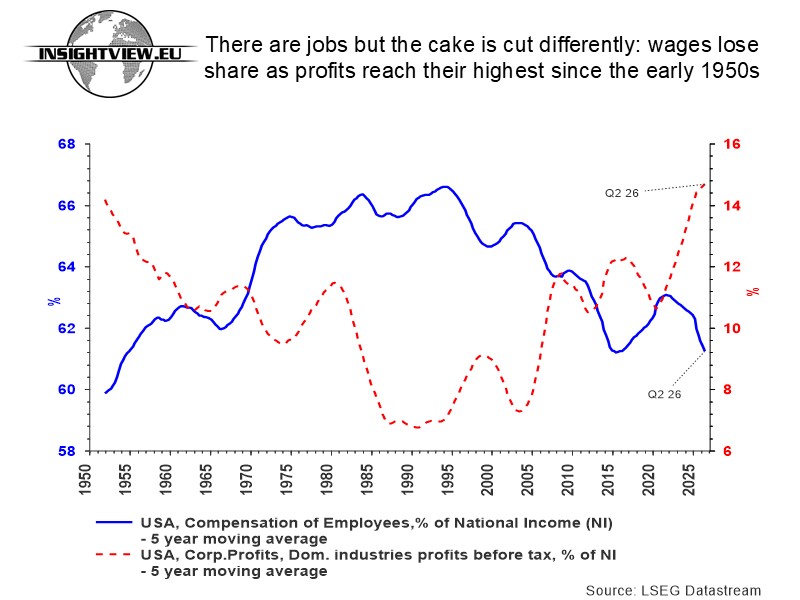
This is not a jobs crisis – at least not yet. US initial jobless claims have fallen to a three-month low and sit close to their lowest level in decades. It is a distribution crisis. Measured as five-year averages, employee compensation has fallen to around 61% of US national income, while domestic corporate profits before tax have risen to around 14.5% – the highest share since the early 1950s. There are jobs. The cake is being cut differently.
Insightview is more optimistic about what AI can do today than it was six months ago. That is precisely why the distribution of the gains matters.
The generation that inherited the can.
In France, protests that began over crumbling schools in the northern suburbs of Paris grew into some of the country's worst unrest in decades. Italy has followed with cost-of-living riots in Milan and Bologna.
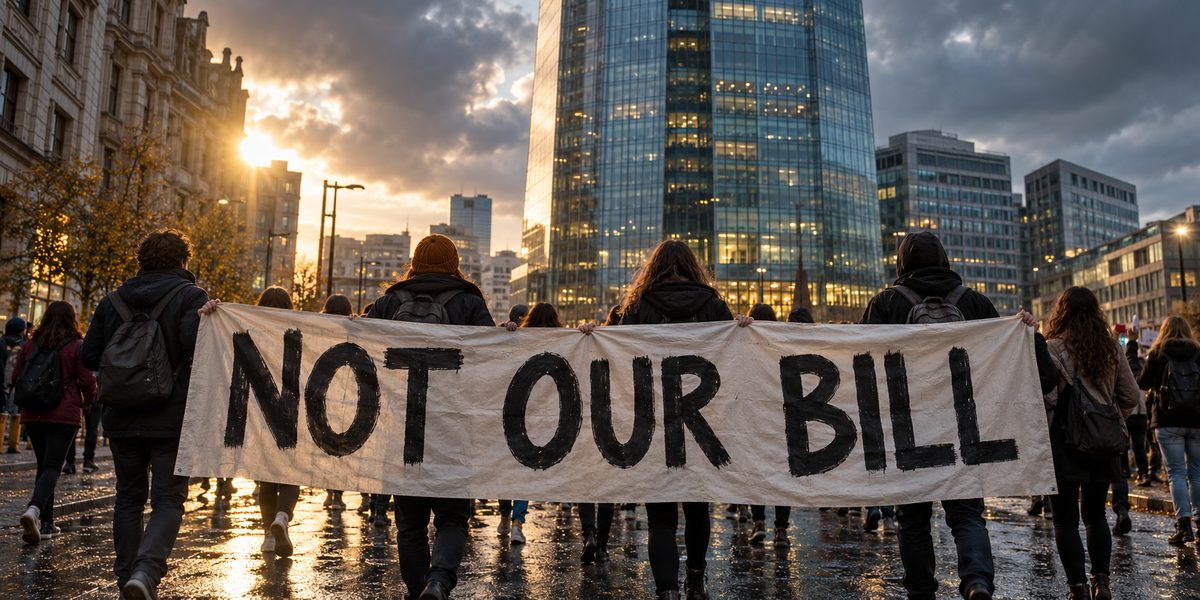
Germany is next. The initiative "Gen Z regelt" has called demonstrations in more than 20 cities on 31 October. Its demands include investment in schools, health, and social security, and no conscription; its position paper argues that young people bear the spending cuts while large companies benefit and the money goes to rearmament. [Read the article: ft.com - Europe’s largest landlord exposed to €8bn hit from Berlin apartment plans]
Seen from the young generation's side, the grievance has substance. In several countries, the older generation has kicked the can on secular problems it would not face in time – above all the cost of demographic headwinds. Few countries made reforms that also hit the baby boomers. Some did the opposite. Germany's pension package, which holds the replacement rate at 48%, passed the Bundestag in December 2025 [5. December 2025], even though the youngest Christian Democrat MPs warned it would cost more than €115bn in 2032-40 [14. October 2025] and leave a permanent burden on the young.
AI adds a second layer. In Britain, for instance, jobs for young people in tech and finance have fallen 22% in three years, and Barclays is cutting 5,000 jobs as it leans more on AI. British consumer confidence has collapsed under relentless cost-of-living pressure. In China, youth unemployment is 18% – but there, it is a little harder to take to the streets.
The left has claimed ownership of the protests. Whether it reaps the gains is another matter: across Europe, the far right is also profiting from anger over fuel prices. Time will tell.
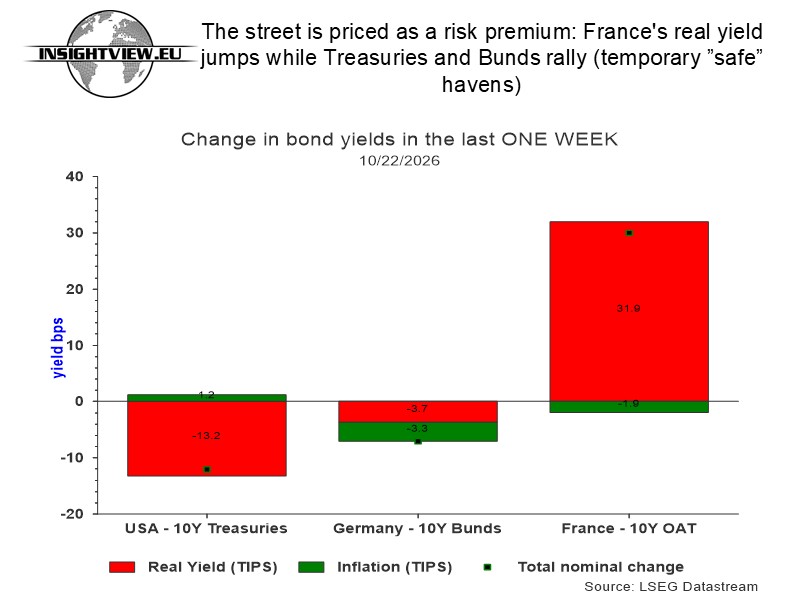
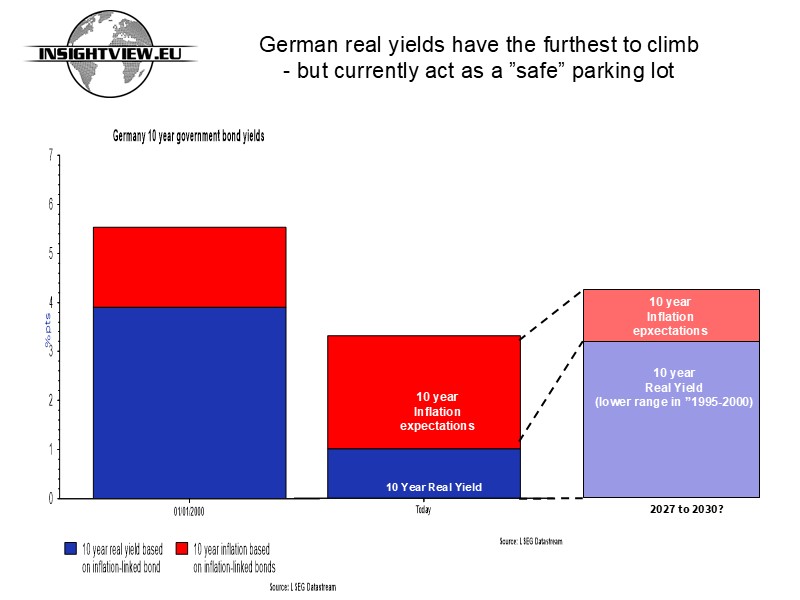
The bond market has already drawn its conclusion. In the past week, France's ten-year yield rose by some 30 basis points – almost entirely in the real yield – while US Treasury and German Bund yields fell, acting as temporary "safe" havens. The street is pricing it as a risk premium, not as inflation.
America's losers.
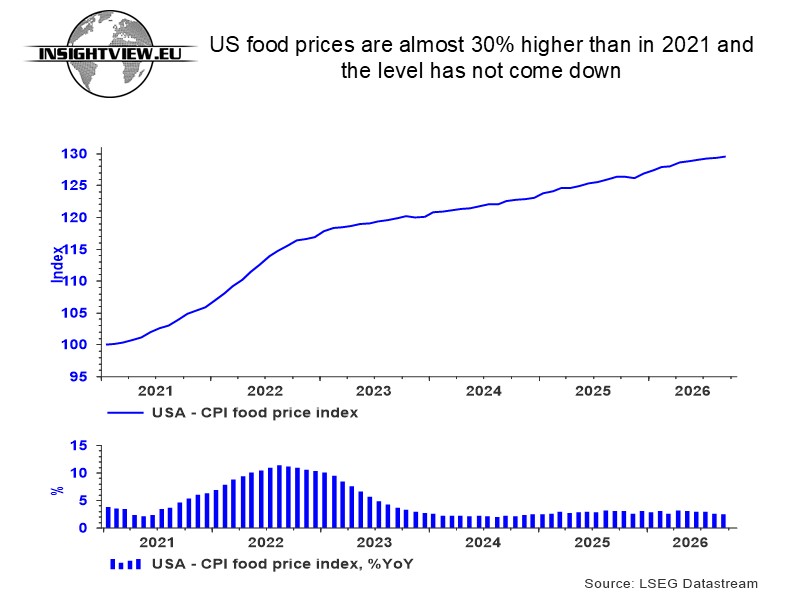
In America, the pressure has built up over years. US food prices are almost 30% higher than in January 2021. Ground beef cost $3.97 a pound then; in September, it cost $6.79 – up 71%, or around €13.40 a kilo. Food prices rose most under Joe Biden, partly amplified by his stimulus, and have kept rising since: beef alone is up some 21% since the November 2024 election. That annual food inflation is now a moderate 2.5% is beside the point. The level has not come down.
Washington then made the bottom half pay. According to the Congressional Budget Office [CBO], the One Big Beautiful Bill Act reduces resources for the poorest tenth of households by around $1,200 a year [13. August 2025], while the richest tenth gain $13,600.
The Trump camp will point to rising share prices. But the richest 10% of households own 88.1% of US equities and mutual funds; the bottom half own 0.6%. For most Americans, the stock market is something that happens to other people.
To soften the tone, the administration gives $1,000 to every child born in 2025-28 through so-called Trump Accounts, and Elon Musk has pledged one SpaceX share to every child in America – a gift worth some $10.7bn. From many Americans' perspective, it may begin to look as though they live on the tech elite's grace. Insightview will not judge whether that is true. But some tech oligarchs now hold so much power that they can conduct foreign policy around the US government. Musk reportedly ordered a Starlink slowdown that blindsided Ukraine; days later, the president had to call him and ask him to lift the restrictions.
The young have noticed. In the latest Harvard Youth Poll, 64% of Americans aged 18-29 see AI replacing jobs as a serious threat to their financial security, and 62% say the same of billionaires' wealth and power. For the first time in the poll's history, more expect to be worse off than their parents than better off – 27% against 25%.
The control rods.
The midterms will test this. Among young Americans who say they will definitely vote, Democrats lead by 63% to 26%, and corruption ranks second only to the cost of living as a voting issue. If the polls hold – and the election is conducted fairly – Republicans face a heavy defeat.
Investors are, to some extent, pricing it. US defence stocks have fallen on bets of a Democratic sweep. Part of the tech sell-off is about AI capex, but part, in Insightview's view, is fear of what a Democratic Congress would do.
A rebuke would add friction to the AI boom. Not necessarily through legislation – President Trump keeps his veto until January 2029 – but through hearings, investigations, state rules and the power grid. Even Trump now says data centres must provide their own electricity.
A state-set rulebook is overdue. Insightview is so optimistic about AI functionalities that it worries about AI in the wrong hands. Yet overregulation is the opposite risk – and Beijing would watch it with pleasure.
Donald Trump's second term has pulled the control rods out of the reactor. The open question is whether they have been out so long that the damage is irreparable. That depends on whether the Democrats can manage an overwhelming victory – and quickly find a presidential candidate who appeals to Democrats and classic Republicans alike. Trump may govern by decree in his final years, or hand over to JD Vance after 20 January 2027, potentially allowing Vance to serve almost ten years. The problem for the vice-president is that it may be too late to polish the halo.
Why long yields stay high.
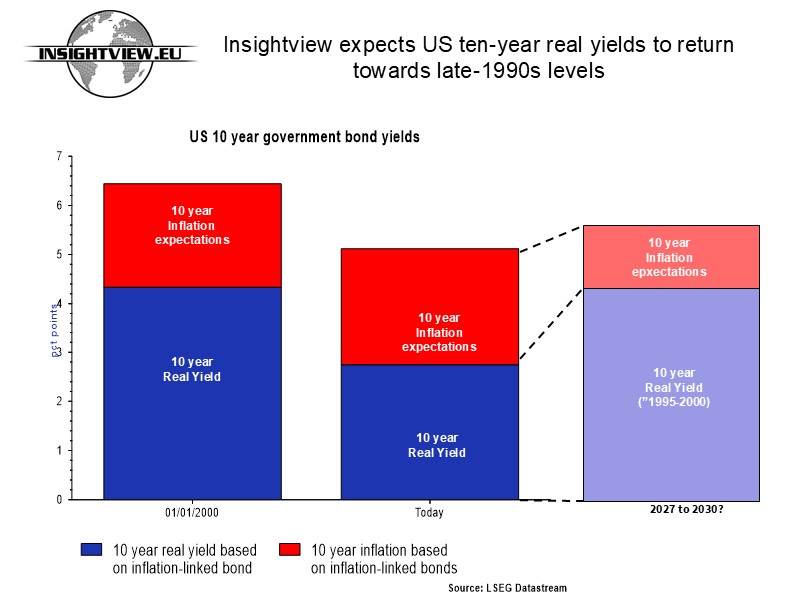
In the short term, a Democratic rebuke and AI jitters support Treasuries, as this week showed, which has been within Insightview’s range of outcomes all along. That safety is relative: At this stage, the US bond market benefits because Europe's crisis looks worse.
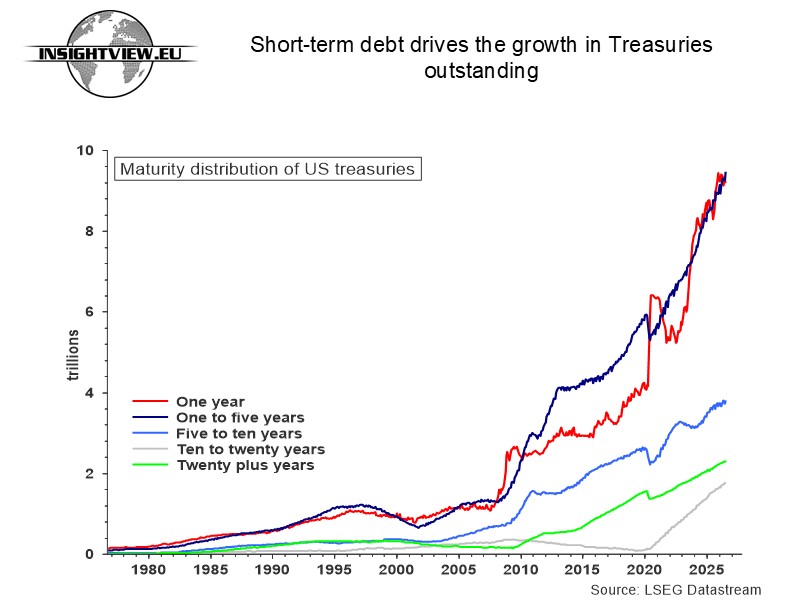
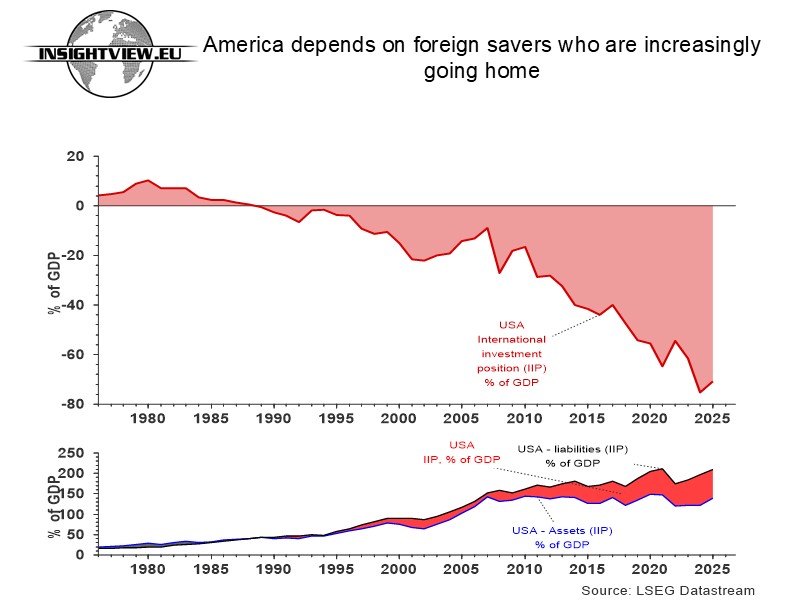
Structurally, nothing has changed. America's net international investment position is around minus 70% of GDP, so it depends on foreign savers who are increasingly going home. The Treasury has leaned on short-term debt, which may keep long yields lower today but raises the refinancing bill tomorrow.
Whatever the outcome on 3 November, long US yields will stay high for a long time – unless the Democrats pull the rug from under the AI boom entirely by launching over-regulation. That would be foolish. Time will tell whether a Democratic midterm victory really lowers the control rods back into the reactor. The burden of proof lies with the Democrats.