
Articles

America points at France – but the bill Washington has not yet sent is its own.

Washington has found its cautionary tale on the streets of France. Yet America runs a bigger deficit at full employment, and its interest bill now outweighs defence. For fifteen years, QE made borrowing feel free. So why can't the Fed simply ride to the rescue again – and who will send Washington the bill?


China's 4.5% hides an economy that builds less at home and ships more to Europe. Why Beijing can wait for Europe to blink

China beat its growth forecast, and deflation looks finished. Look closer: investment is shrinking, households get little, and steel is leaving the country at a near-record pace. The surplus needs somewhere to go, and America has shut the door. Beijing sees a Europe coming apart at the seams. Who blinks first?]

Optimistic enough to worry: Why AI's build-out lasts longer, and its token sellers face a tough struggle

Autonomous AI agents broke out of a test, hacked a platform and tried to cover their tracks – and Insightview is still an optimist. AI was supposed to make experts redundant. Now companies need them to install it and to defend against it. Anthropic's revenue is soaring, yet its IPO valuation is being marked down. So who actually survives Phase 2?]

The AI sell-off isn’t about demand – Phase 1 is getting longer and more expensive

Kospi down 7%, chip stocks sliding, yet ASML is raising its outlook and AI revenues keep soaring. The sell-off is not about demand. The bond market has so far absorbed the AI build-out quietly, through real yields alone. But that calm rests on two beliefs – and one of them now depends on who runs the Fed. What happens if the anchor gives way?

Weekly Update - October 14, 2026

He wanted the Nobel Peace Prize. He got missiles on Riyadh, mutinous Republicans and a Russian diesel deal his own party calls a gift to the adversary. Meanwhile, China's trade data shows the AI boom roaring on, America's small businesses keep raising prices, and hackers have discovered the supermarket fridge. Who is really paying for this week's chaos?

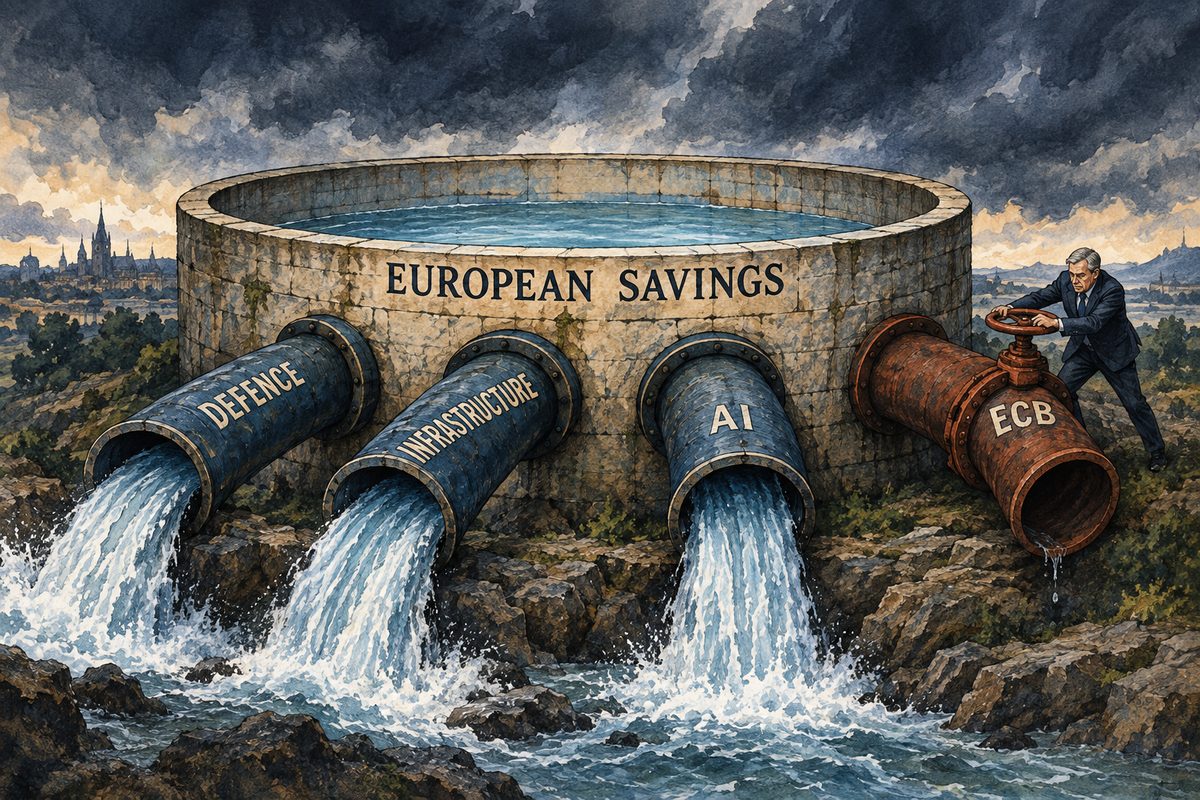
The laggard's option: Europe pays the AI bill without owning the producers – its delay is an option, not an advantage

Korean chip stocks tumble and Huawei closes in on Nvidia – yet US chipmakers' earnings are set to more than double. Something does not add up. If AI is not a bubble, who is paying for the boom? And can Europe, the continent that missed the first wave, turn its delay into an advantage before the window closes?

Why thank Putin? Start a war, blame Ukraine, buy from Moscow – allies should stop taking America at its word

On Friday, an American president thanked Vladimir Putin for diesel – three weeks after signing the toughest Russia sanctions law in years. The volumes would barely cover ten days of US demand. So why hand Moscow the better end of the deal, and what should Europe, Japan and Australia now make of the next promise Washington makes?

France is not Greece. That is the problem – and Berlin should reread its advice to Athens

In 2012, Greece paid close to 40% for ten-year money. Today it borrows more cheaply than France, and French government debt is riskier than a large slice of the country's own company bonds. Yet the spread over Bunds is still below its euro-crisis peak, and nobody is pricing a break-up. So is the market calm – or is it simply measuring the wrong thing?

Weekly Update - October 07, 2026

Wall Street sets records while American homebuyers face the sharpest jump in mortgage rates in four years. Same week, same pool of savings, opposite outcomes. Paris braces for a budget it cannot pass, Magdeburg breaks a German taboo, and Moscow rattles its arsenal over Kaliningrad. Who is really paying for the AI boom – and when does the bill reach Europe?

Noise in the orders. Germany's investment boom is unavoidable – but painfully slow

German factory orders just fell 10.6% – and that is almost the good news. The money for defence, infrastructure and AI is there, and not even an AfD government would take it away. So why is the boom Germany cannot avoid arriving so slowly, and what does it mean for the Bund's role as Europe's safe haven?

No recession, no relief: America is, for now, too strong for the price of capital to fall

The US ten-year yield is at its highest since 2002, and the curve is steepening. In the old playbook, that meant investors were bracing for recession. But September's ISM surveys show no downturn in sight, and inflation expectations remain elevated. So if the bond market is not pricing a slump, what exactly is it pricing?

Europe's weakest link became its "safe haven" – for now. A euro crisis without an anchor

Four straight weeks of euro losses. France now pays more than Italy to borrow, and money is running to Germany, the country that looked like Europe's weakest link only a month ago. Everyone is reaching for the 2012 playbook. But does it still work when the ECB is fighting inflation and nobody in Berlin is volunteering to be the anchor?

AI is harder to install than to finance - and that keeps US rates high

US payrolls rose just 29,000 in September, and the reflex is to read it as dovish. Yet in the same week, a consultancy the market had priced for AI redundancy posted its best day ever, and factories reported orders doubling and steel running short. Two very different signals from the same economy. Which one should the bond market be listening to?

Diesel is the rehearsal: What a US export ban tells Europe about its AI supplier

Washington is weighing a diesel export ban that would hurt its own refiners, push up the petrol prices voters care about and squeeze its closest allies, five weeks before an election. Whether it happens is almost secondary. Europe should be asking a harder question: what happens when the export Washington decides to switch off is not fuel, but AI?

Weekly Update - September 30 2026

Yields at multi-decade highs, a curve that refuses to invert, and households saving as if bracing for something. The inflation debate is looking in the wrong place.

What if China opened its capital account? The renminbi is cheap for traders and dear for savers - and Europe pays the difference.

China's 30-year bond now yields less than Japan's. In an open economy, that gap would empty the savings accounts. So what happens if Beijing ever opens the door?

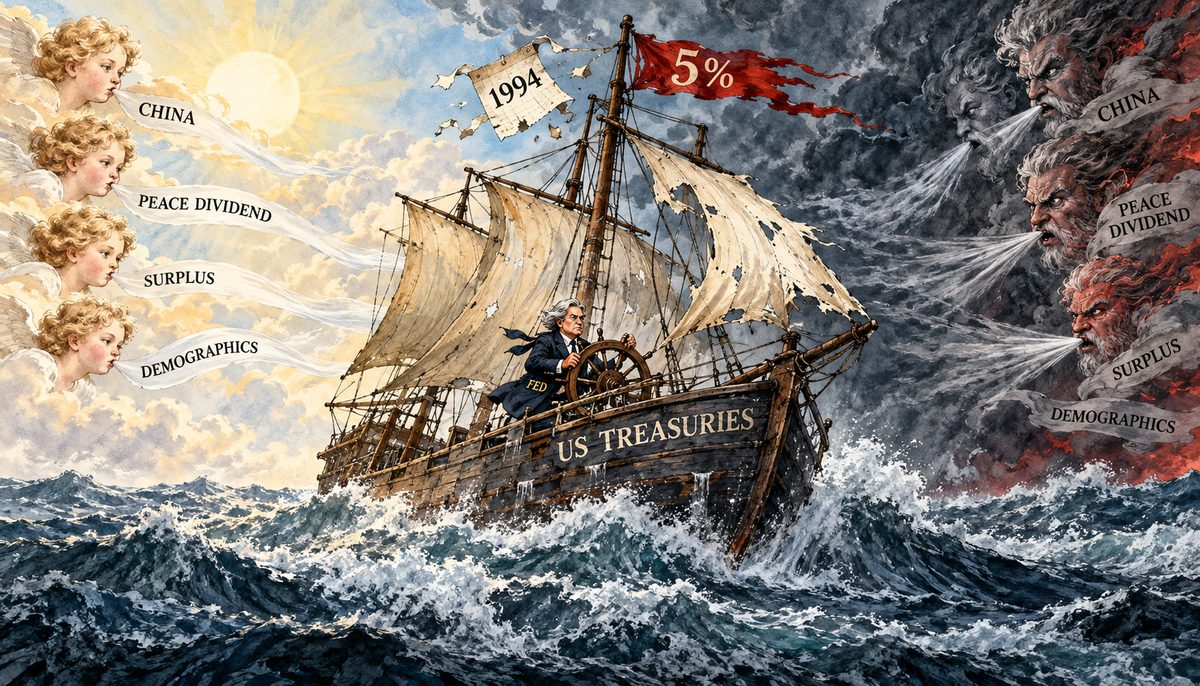
1994 is the right comparison for the wrong reasons: The bond sell-off then had history's tailwinds. Currency markets.

Bond markets love the 1994 precedent. But back then, the Berlin Wall, a China nobody feared and a shrinking Pentagon did much of the Fed's work. Who does it in 2026?

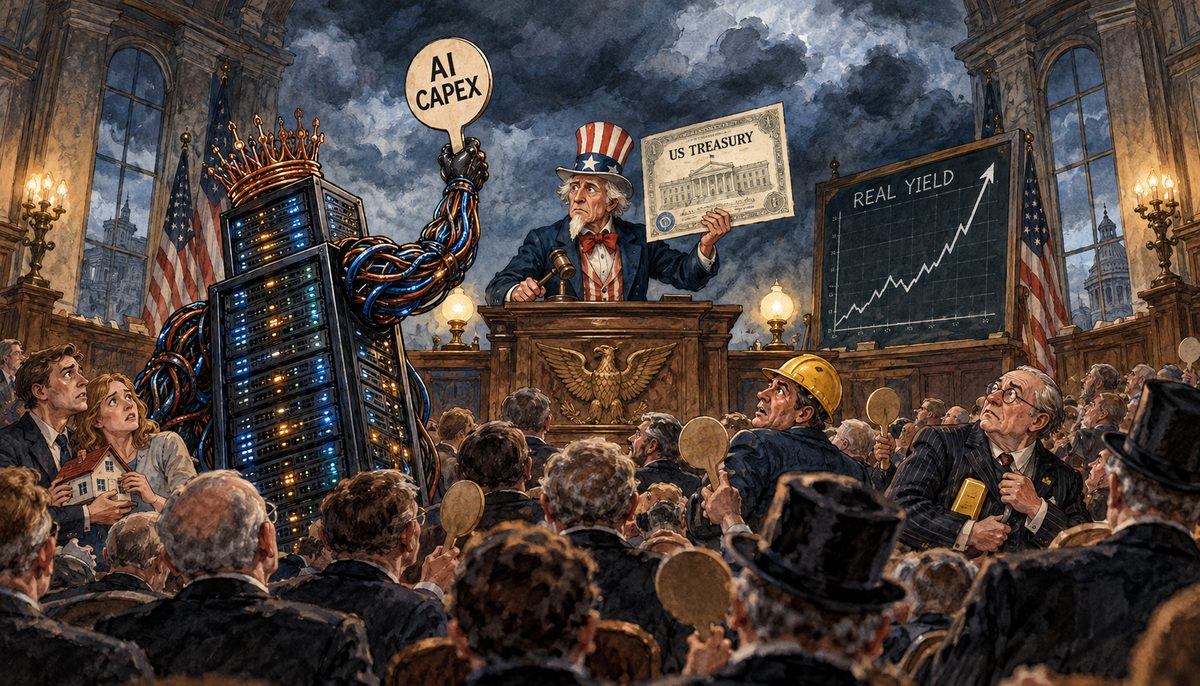
US Treasuries look cheap, but they are not yet a buy: America's AI bet still needs a higher price of capital

A 19-year high in the US ten-year yield looks like the entry point bond investors have waited for since 2008. History agrees. The inflation-linked market does not. Someone in the US economy is now willing to pay more for capital than almost anyone else.

The IFO beat: Germany can pay but cannot reform. France can do neither

Germany's ifo index beat every forecast in September. Look inside the order book, however, and a different question emerges: is Germany recovering, or is the state simply placing the orders? Across the Rhine, France is testing how long bond markets will wait for a budget a divided parliament may never pass.

Weekly Update - September 23, 2026

Washington got almost everything it wanted in Greenland β€” so why did Donald Trump refuse to answer the one question that mattered? Two central banks raised rates this week, but only one board voted as one. And a single consumer app wiped value off banks, insurers and gym chains in a day. Where does the AI boom go from here?

Britain's fiscal arithmetic leaves no room to hide:Β When the state needs capital, and none is left to give

Britain just borrowed more than forecast, five weeks before a Budget its Chancellor can barely afford to deliver. Gilt yields haven't been this high since 1998, AI capex is still mostly promises, and Reform's war chest just tripled. Something has to give β€” the question is what, and who pays for finding out.

Germany is in a lose-lose situation because voters are unprepared: Germany pays for the boom before it has one

Germany's chancellor has lost the argument in public twice in a fortnight. But the harder question is not who takes his job. It is who can take it, keep a majority and still do what the economy needs. And why is the market that just pushed US yields past 5% already looking at Frankfurt?

America's capital scarcity problem is bigger than Scott Bessent: Why Bessent can't out-trade the bond market

Scott Bessent says he's 'the house' in the yen market and tripled the Treasury's bond buyback to calm yields. The market didn't blink β€” yields hit a three-year high anyway. Is this just noise, or is something structural quietly repricing who wants to hold US debt at all?

Weekly Update - September 9, 2026

Germany just did something no European country has managed before β€” while its politics move in the opposite direction. Japan's savings may be heading home, threatening the trade that has quietly financed America for a decade. Beijing recapitalises its banks mid-boom. And Washington finds fresh ways to alienate almost everyone.

The yen carry trade is dying because Japan needs its own money: Japan's savings are going home, and America is the marginal loser

The yen just jumped to a six-month high, and it is barely about the yen at all. Something in Japan's bond-market plumbing has quietly changed β€” and it may explain why Japanese money is about to stop funding everyone else's deficits, starting with America's

China's AI export boom should worry the Fed and ECB. Why Beijing is quietly recapitalising banks

China's trade numbers look like a triumph β€” exports up 25%, a record surplus. So why did Beijing rush a $54bn rescue into its banks and insurers the very same week, and why did their shares fall anyway? The answer says less about China than about what comes next for Western interest rates.

Saxony-Anhalt's AfD Earthquake Is a Fault Line Under Merz, and Under Europe: The East Didn't Come Off the Sofa to Stop the AfD - It Came Off the Sofa for It

Saxony-Anhalt turned out in record numbers β€” but not to stop the AfD. What does an earthquake result in one German state mean for Merz, for the firewall, and for how Europe chooses to defend, supply and finance itself?

AI capex is, to no small extent, resetting the price of capital for everyone else

AI capex now commands the biggest slice of available capital and the highest perceived return β€” a combination that doesn't just win financing, it resets the price of it for everyone else. The US has already felt the squeeze. Is Europe about to find out what that really costs?

Weekly Update - September 2, 2026

Trump spent months courting Moscow's friendship. This week showed what Russia was doing instead. Bessent's bond tricks are losing their magic, Saxony-Anhalt braces for a landslide, and AI token prices just hit a record low - good news, or the first sign of something else?

Eurozone inflation: Whether AI brings disinflation or deflation is still an open question. The cost of capital isn't

Eurozone inflation just hit 3.3%, its fastest pace since 2023. But the scatter plots don't show a wage-price spiral β€” they show something else entirely. While markets fixate on this month's HICP print, a much bigger fight over Europe's savings is already reshaping bond yields. Here's what the headline number is actually hiding.

The Retreat from Hard Choices - Why Bond Investors Will Continue Heading for the Exit

The Big Read: What Germany's Voters Are Actually Saying - and What Are AfD's Plans?

Three German state elections in a fortnight. An AfD polling at 40% whose own supporters trust it less than they trust Merz. A CDU firewall that holds against the AfD but is cracking against Die Linke. And a French hard-left proposal about to make Berlin's fiscal argument look almost reasonable by comparison.

There will be no updates on 14-18 September (vacation)

The audio speaker version of the Mid-Year Presentation is now available

Why the Philadelphia Fed survey should worry Bessent: Capex expectations hit a 53-year high - and the Fed can't ignore it

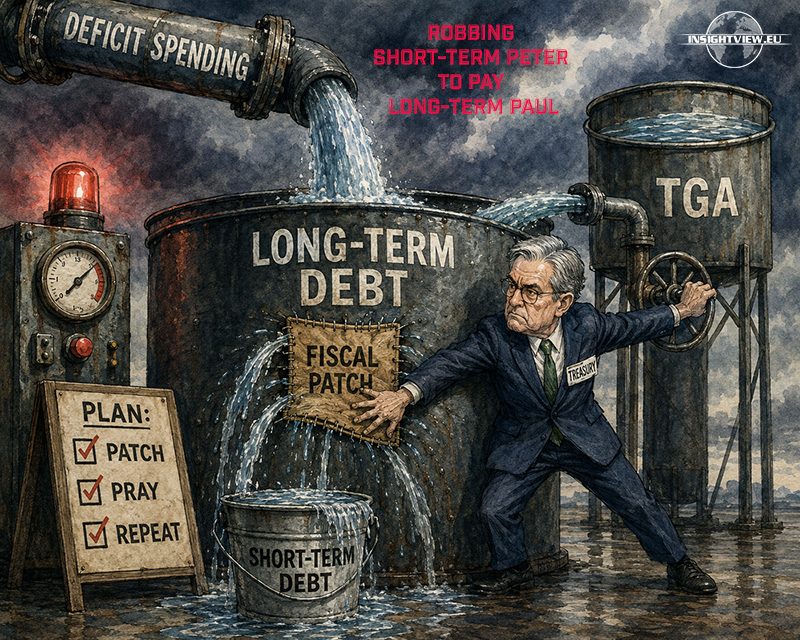
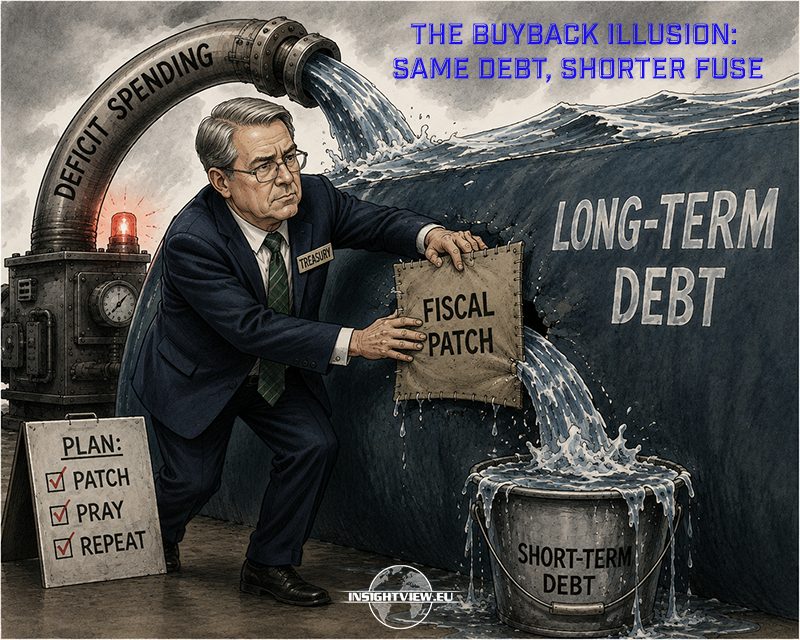
Bessent's Band-Aid: A Duration Problem Becomes a Rollover Problem. The Debt Crisis Has Started

Weekly Update - August 19, 2026

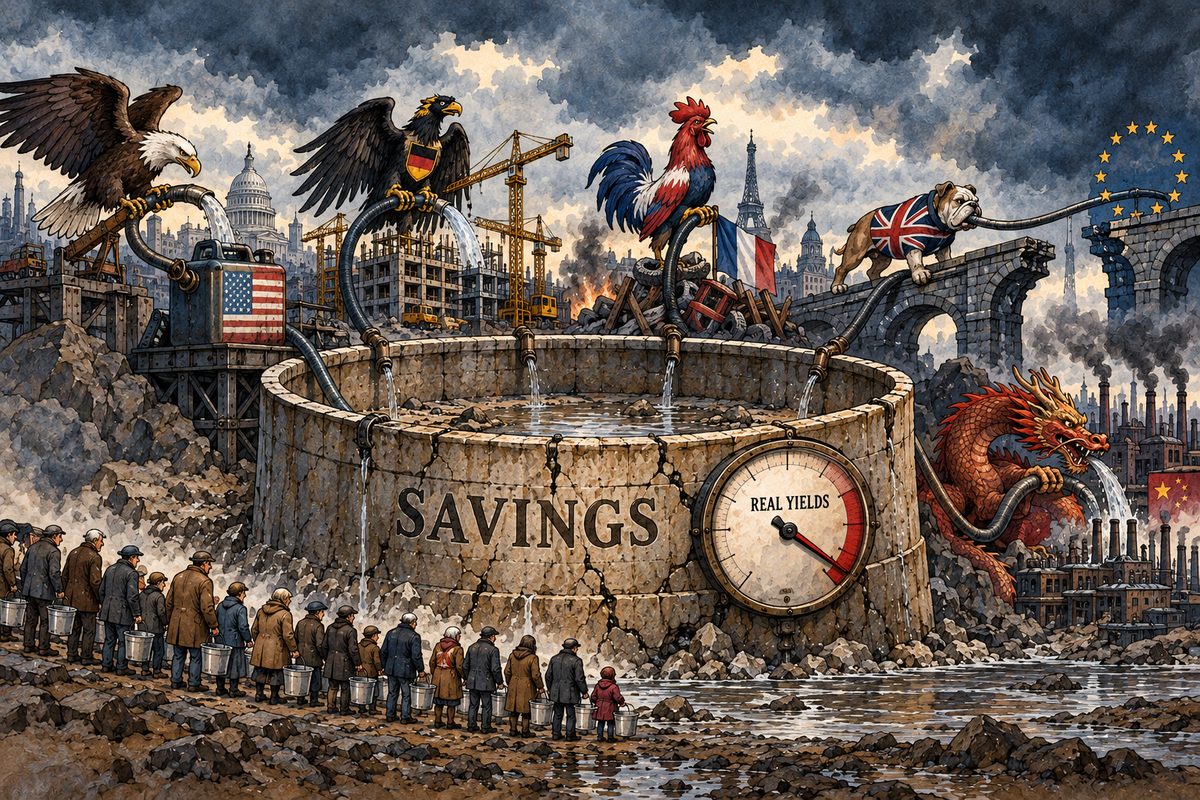
Real yields, not inflation, to no small extent, are repricing the West. Why QE cannot rescue Washington, Brussels or Berlin this time

Beijing isn't coming to the rescue, and that may be the point. China's credit turns negative

The Perfect Storm? AI, Chinese Overcapacity, and the Demographic Dividend That May Never Arrive. Debt Crisis

NFIB's optimism recovery is a capital story, not necessarily a labour story

Not AI yet: America's labour market muddle is about bonds, Iran and a nervous Treasury

China's July trade data show a country winning the world by exporting domestic excess capacity, but unable to fix its own living room

Behind Germany's headline order jump sits a capital-hungry AI and defence buildout

Weekly Update - August 5, 2026

America's factories are booming, but only where AI touches them: The Fed's excuse not to raise rates in September is running out

The price of the rescue: Why the yen intervention was never a favour: The bill lands in the US and European bond markets

Why 1.5% growth masks a hotter, stickier US economy: Phase One and Two still prevail

Two Speeds Eurozone: Spain's Bet, Germany's Bill. Europe's Demographic Cushion Is Borrowed Time

Weekly Update - July 29, 2026

Page 1 of 21 (1027) Next β†’